Garage Door Spring Repair in New Jersey
A broken spring turns your garage door into a dead weight that your opener and cables were never designed to lift. Garage door spring repair in New Jersey means restoring the counterbalance system so the door moves safely and predictably under high tension not guesswork.
Emergency High-Tension Spring Replacement & Repair in NJ
When a spring snaps, the entire system is out of balance. We handle emergency, high‑tension spring failures across the Garden State with calibrated replacement, not temporary fixes.
Identifying a Broken Torsion Spring: The Loud “Bang” and Lift Failure
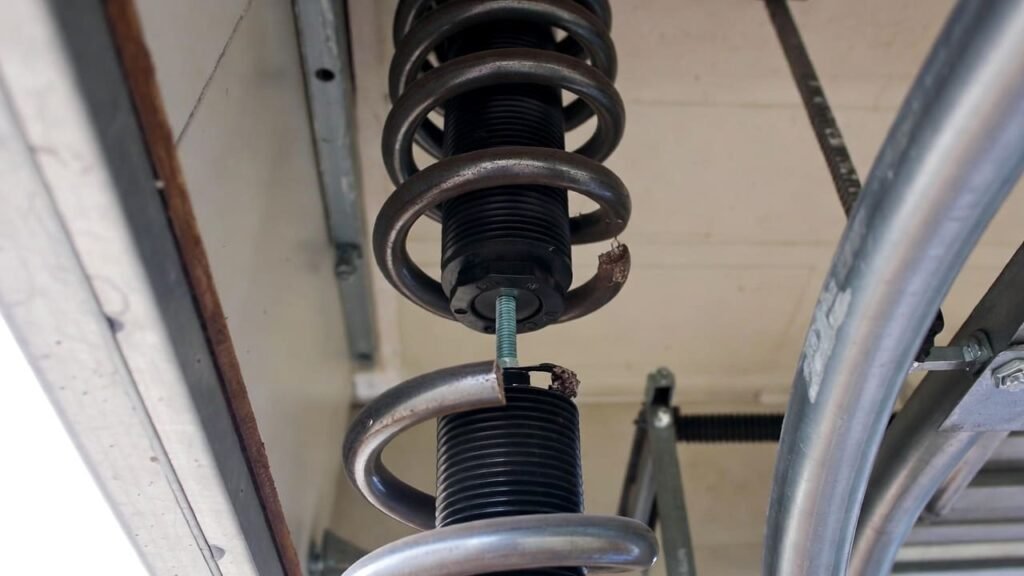
A broken torsion spring usually announces itself with a loud bang from the garage as the steel unwinds in a split second. Common signs include:
- A visible gap in the torsion coil above the door.
- Door suddenly too heavy to lift, even with the opener running.
- Door drifting or slamming shut because springs no longer counterbalance weight.
In this condition the opener should not be used; the system is no longer safe to operate.
Why You Should Never Attempt DIY Garage Door Spring Repair
Garage door springs are engineered to store significant energy; releasing or setting that tension without the right tools and training can cause serious injury. DIY efforts with improvised bars, vice grips, or power tools can:
- Cause the bar to slip from the winding cone, throwing metal with force.
- Let the door free‑fall if 7×19 strand aircraft cables or bottom brackets fail.
- Twist the shaft and damage cable drums, leading to off‑track doors.
High‑tension work belongs to trained technicians familiar with springs, cones, and safe lock‑down procedures.
Rapid Response for Snapped Springs Across New Jersey
A snapped spring often means vehicles trapped in the garage or a door that will not secure. We provide dispatch across North, Central, and South Jersey, prioritizing:
- Doors that will not open at all.
- Doors that are stuck partly open and cannot safely close.
- Situations where a broken spring has already caused cable or track issues.
The objective is to secure the opening and return the door to safe, balanced operation as quickly as conditions allow.
Specialist Services for Torsion & Extension Spring Systems
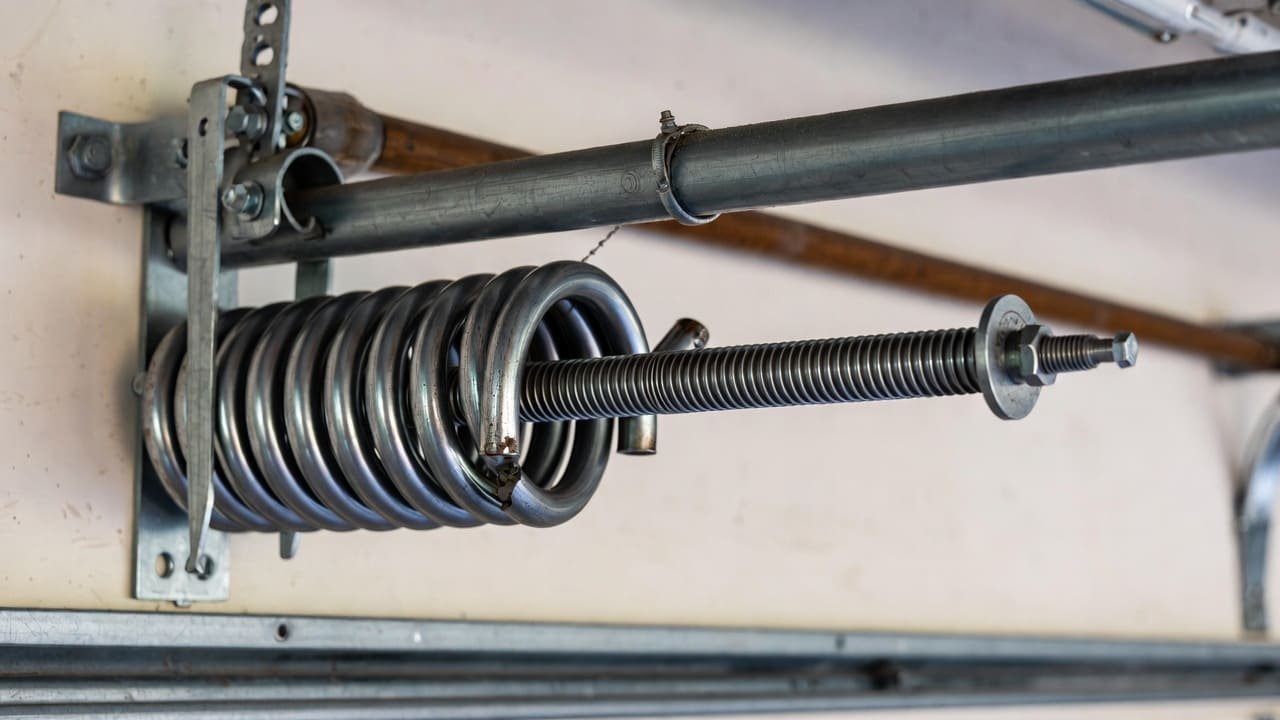
Not every New Jersey garage uses the same spring configuration. We service torsion springs, extension springs, and proprietary systems, matching spring type and cycle rating to door weight and usage patterns.
High-Cycle Torsion Spring Installation for Long-Term Durability
Standard torsion springs are often rated around 10,000 cycles; heavy use can burn through that in a few years. For high‑use homes we:
- Calculate door weight and shaft configuration to select the proper wire gauge, inside diameter, and length.
- Offer high‑cycle torsion springs designed for significantly more cycles than basic builder‑grade parts.
- Set springs so the opener is moving a balanced door—not lifting all the weight.
This reduces long‑term strain on motors, cables, and cable drums, and extends intervals between major repairs.
Extension Spring Replacement & Safety Cable Threading
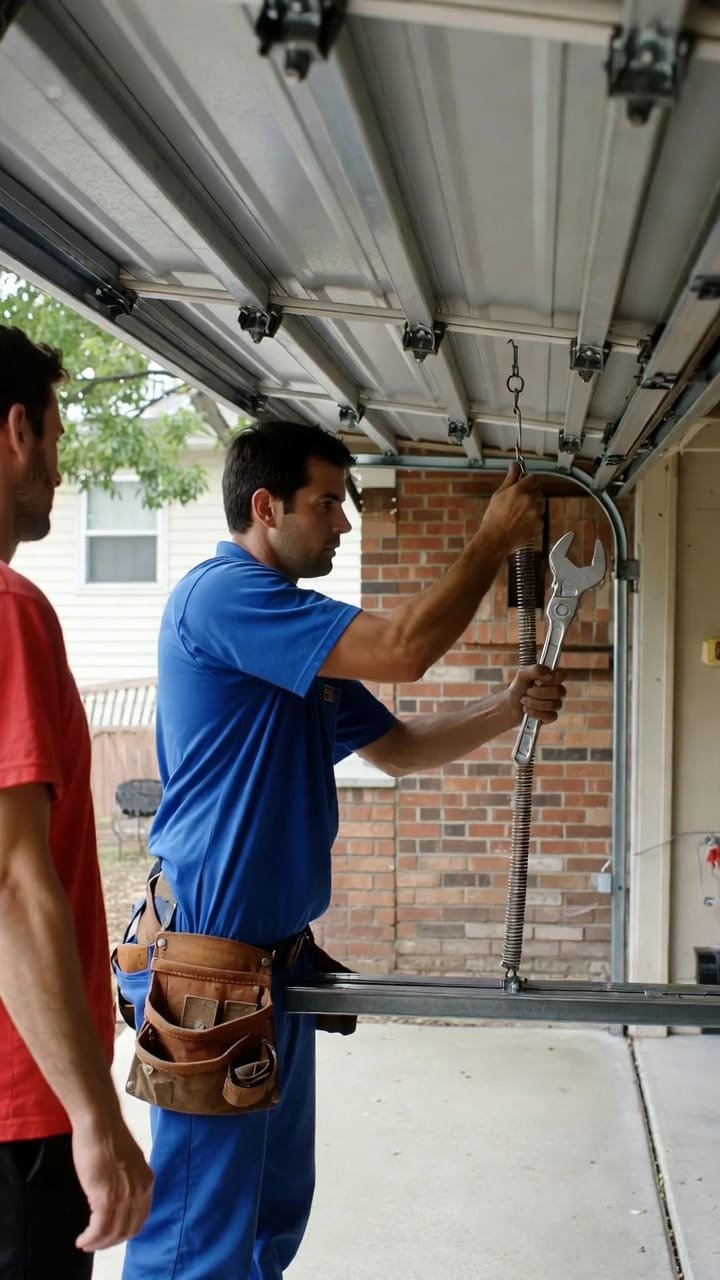
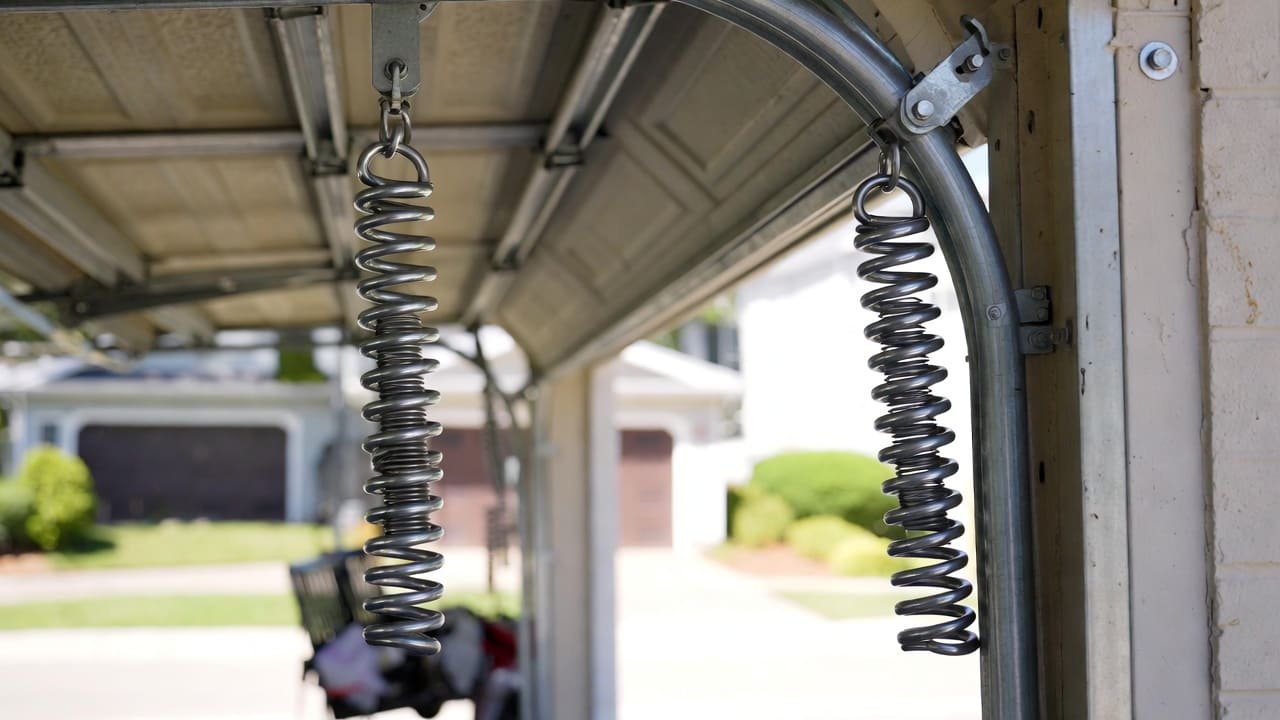
Some older and lighter doors use extension springs mounted along the horizontal tracks. When extension springs fail, they can whip dangerously if not properly contained. Our process includes:
- Replacing worn extension springs in matched pairs.
- Installing or verifying safety cables threaded through the springs to contain them if they break.
- Confirming that both sides of the door rise evenly and stay in sync.
Safety cables are especially important in attached garages where people walk or park directly under the tracks.
Wayne Dalton TorqueMaster System Conversion and Repair
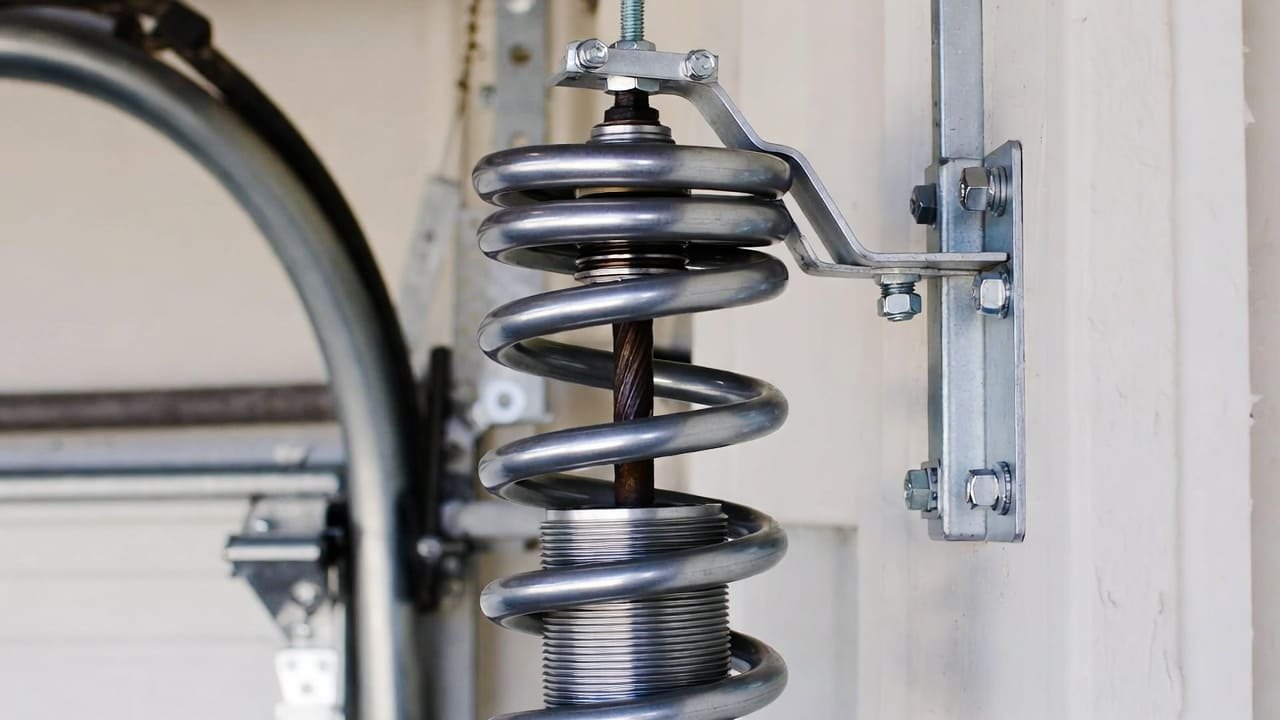
Wayne Dalton TorqueMaster systems house springs in a hollow tube, hiding them from view. When these springs fail, doors often become extremely heavy with little outward sign. We can:
- Diagnose hidden spring failures based on lift resistance and travel behavior.
- Repair or replace TorqueMaster components where appropriate.
- Convert some TorqueMaster setups to standard exposed torsion systems for easier future service, when conditions and structure allow.
Conversions are designed to preserve safety while improving long‑term maintainability.
Corrosion-Resistant Galvanized Springs for Coastal NJ Homes
In coastal and high‑humidity areas of New Jersey, unprotected steel corrodes faster. We recommend galvanized or specially coated springs in these environments to:
- Resist surface rust that leads to pitting and premature failure.
- Reduce friction between coils when properly lubricated.
- Extend practical lifespan in climates where salt air and moisture are constant factors.
This is especially relevant for Jersey Shore and low‑lying coastal communities.
Our Professional 6-Step Spring Calibration Process
Correct spring work is measured, repeatable, and focused on door balance—not just installing new steel. Our garage door spring repair in New Jersey follows a defined calibration protocol.
1. Calculating Door Weight and Proper Wire Gauge
We start by:
- Weighing the door or determining weight from panel specs when feasible.
- Using spring charts and engineering data to select appropriate wire gauge, length, and inside diameter.
- Accounting for door width, height, and hardware (struts, windows, insulation).
This ensures the spring provides the correct torque for your specific door—not a generic approximation.
2. Safely Releasing Remaining Spring Tension
Before removing broken or fatigued springs, we:
- Secure the door in the tracks to prevent movement.
- Use correct winding bars in the winding cones to unwind any remaining tension.
- Confirm torsion shaft, bearing plates, and bottom brackets are stable before continuing.
Controlled release eliminates sudden, uncontrolled motion that can damage components or cause injury.
3. Winding Cone Inspection and Center Bearing Replacement
With tension removed:
- We inspect winding cones for cracks, rounding, or deformation.
- Check center bearings and end bearings for wear or binding.
- Replace fatigued cones and bearings so new springs work on solid, low‑friction support.
These steps reduce noise, smooth shaft rotation, and help springs deliver even torque.
4. Precision Tensioning for a Perfectly Balanced Door
After installing new springs, we:
- Wind springs to the calculated number of turns based on door height and spring specs.
- Test door travel by hand at multiple positions (quarter, half, three‑quarters).
- Fine‑tune tension until the door holds mid‑travel without drifting up or slamming down.
A properly balanced door reduces load on 7×19 strand aircraft cables, cable drums, and opener gears.
5. Lubrication of Coils to Prevent Friction and Squeaking
Lubrication supports both quiet and longevity. We:
- Apply appropriate lubricant to spring coils to reduce metal‑on‑metal friction.
- Wipe away excess to avoid drips and dust accumulation.
- Address any remaining noise sources in hinges and rollers while on site.
Lower friction means smoother travel and less wear throughout the system.
6. Comprehensive Multi-Point Safety Balance Test
Before we consider spring work complete, we perform a multi‑point test that includes:
- Balance checks at several positions without opener assistance.
- Visual inspection of cables, bottom brackets, and cable drums under load.
- Garage door opener force adjustment and safety reverse testing to match the new balance.
This confirms the door and opener are working as a system within safe limits.
Trusted Local Spring Experts Serving All NJ Counties
Springs are the most dangerous and most critical components in a sectional door. Our garage door spring repair in New Jersey is delivered by trained, local technicians familiar with county‑level climate patterns, building practices, and typical usage.
In New Jersey, heavier doors, steeper driveways, and colder winters accelerate spring wear. We routinely:
- Replace and calibrate springs on high‑cycle doors.
- Address springs working with older tracks and hardware.
- Manage spring loading on doors in neighborhoods where clearances are tight and use is heavy.
Here, freeze‑thaw and higher cycle counts shape spring selection and maintenance schedules.
Frequently Asked Questions About
Garage Door Springs
How much does it cost to replace a garage door spring in NJ?
Spring replacement cost in New Jersey depends on door size, spring type (torsion vs extension), cycle rating, and whether additional work (cables, bearings, drums) is needed. Typical ranges cover parts and professional labor; we provide clear estimates before work, so you know total cost and options.
Should I replace both garage door springs at the same time?
When one spring on a two‑spring system breaks, the other is usually near the end of its cycle life as well. Replacing both springs at once:
- Keeps lift balanced across the shaft.
- Reduces the chance of the second spring failing soon after.
- Protects the opener from uneven loading and unexpected failure.
This is considered best practice by most professional spring specialists.
How many "cycles" should my new garage door springs last?
Standard springs are often rated around 10,000 cycles, while high‑cycle options can go significantly higher. Actual lifespan depends on daily usage; a door cycled 8–10 times a day can wear out standard springs in just a few years, while high‑cycle springs extend that timeframe considerably.
Can a broken spring damage my garage door opener motor?
Yes. When springs fail or lose tension, the opener is forced to lift far more weight than it was designed for. This can:
- Strip gears in the opener head.
- Overheat the motor or stress the start capacitor.
- Trigger force or travel limit faults.
That is why openers should not be used when the door is heavy, crooked, or clearly spring‑damaged.
Client Reviews
Excellent communication from start to finish. Stan kept us informed about arrival time and explained every step of the repair process. Honest and dependable company.
Our garage door panel was damaged after a minor accident. Stan helped us determine the best repair option and restored the door’s appearance perfectly. Very detail-oriented work.
We called for a second opinion after another company suggested a full replacement. Stan inspected everything and confirmed we only needed a minor repair. Saved us a lot of money.
Very impressed with the professionalism. Stan worked efficiently, cleaned up after the job, and made sure everything was functioning properly before leaving. Highly recommend.
Safety First—Schedule Your NJ Spring Repair with the Pros Today
A loud bang, heavy door, or visible gap in the spring means the counterbalance system has failed. If your door is hard to lift, uneven, or stuck, schedule garage door spring repair in New Jersey with All Garage Door Solutions and let trained, properly equipped technicians bring the system back into safe, balanced operation.